Your SAP system has run your company for twenty years. It still does. That is also why your reporting backlog keeps getting longer.
We see it as two different problems: the reporting backlog and the ERP decision. Only one of them has to wait.
Two dates are already on the calendar
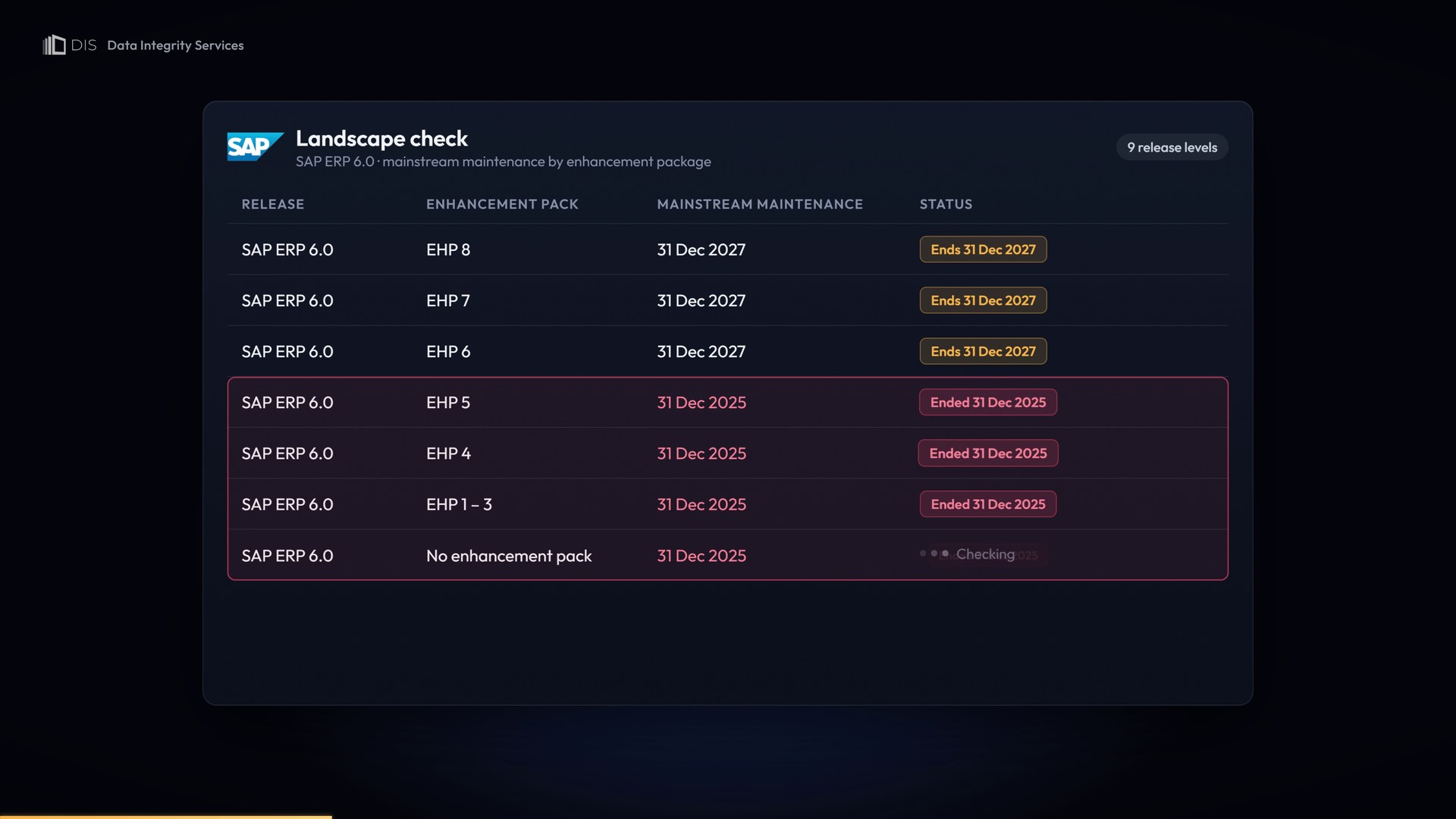
At the end of 2027, SAP stops mainstream maintenance. And if you are on an older enhancement pack, that already happened: December 2025.
The video opens on a landscape check across nine release levels of SAP ERP 6.0. Enhancement packs 6, 7 and 8 show mainstream maintenance ending 31 December 2027. Enhancement packs 1 to 5, and systems running with no enhancement pack at all, show 31 December 2025, already ended.
Neither date is a project plan. Together they put the ERP question on the table whether the business asked for it or not.
Meanwhile, every reporting request gets the same answer
The shared BI and reporting queue in the video holds 47 open requests. Gross margin by plant. Open sales orders over 90 days. Vendor spend by category. A days sales outstanding trend over the last eight quarters. Inventory turns by material group. A refresh of the Q4 board pack, requested by the office of the CFO.
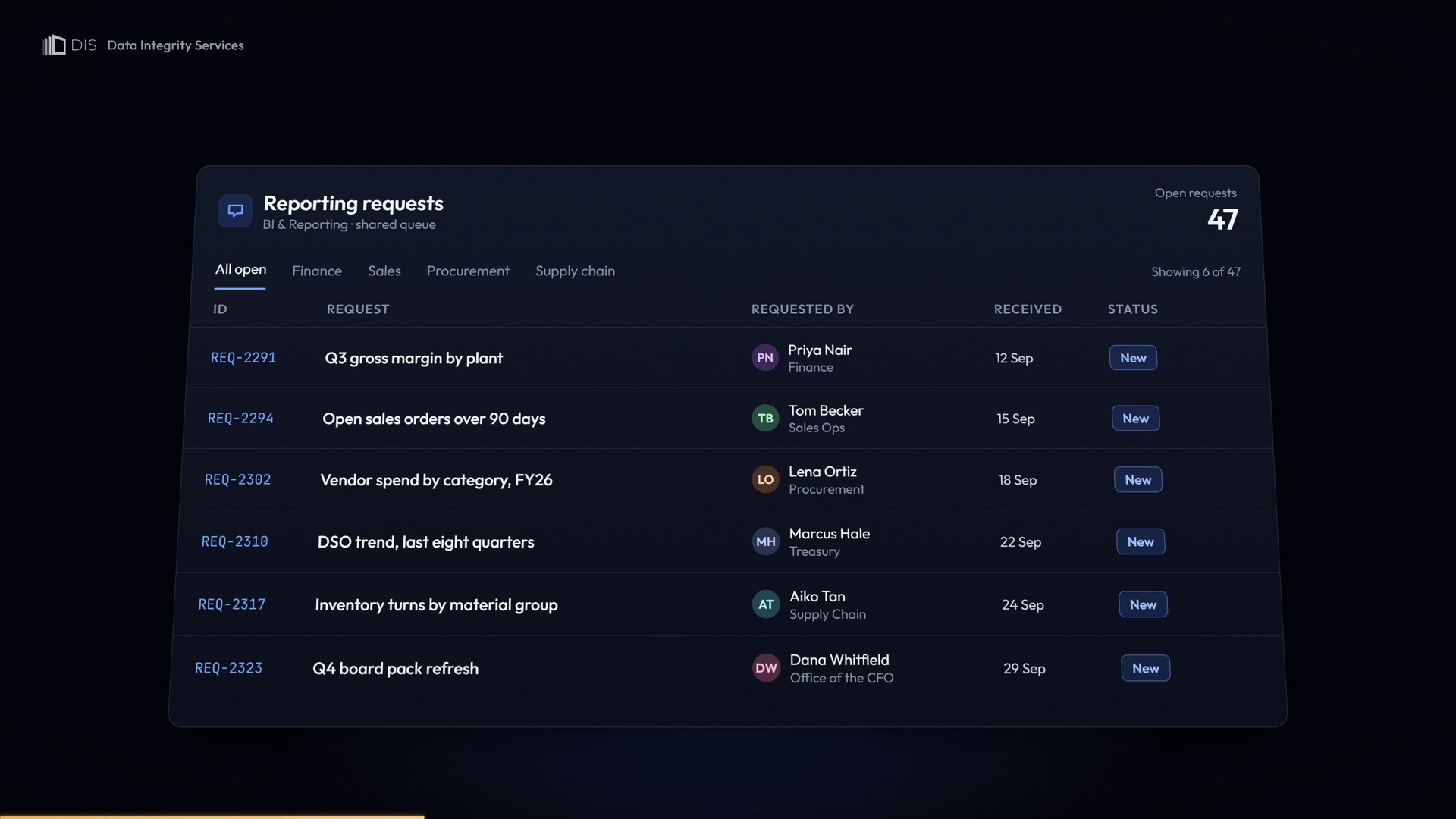
Select them all and the reply writes itself: wait, pending the S/4HANA decision.
That is a fair answer from IT and an impossible one for the business. The S/4HANA program on screen runs from 2026 to 2029: vendor and system integrator selection, business case and approval, fit-to-standard workshops, data migration design. In the video's words, "That decision takes years."
The board pack is due in 21 days. Its first line, revenue and gross margin by region, is marked no data.
The data layer does not have to wait for the ERP
"Here is what nobody says out loud," the video says. "Your analytics do not have to wait for your ERP."
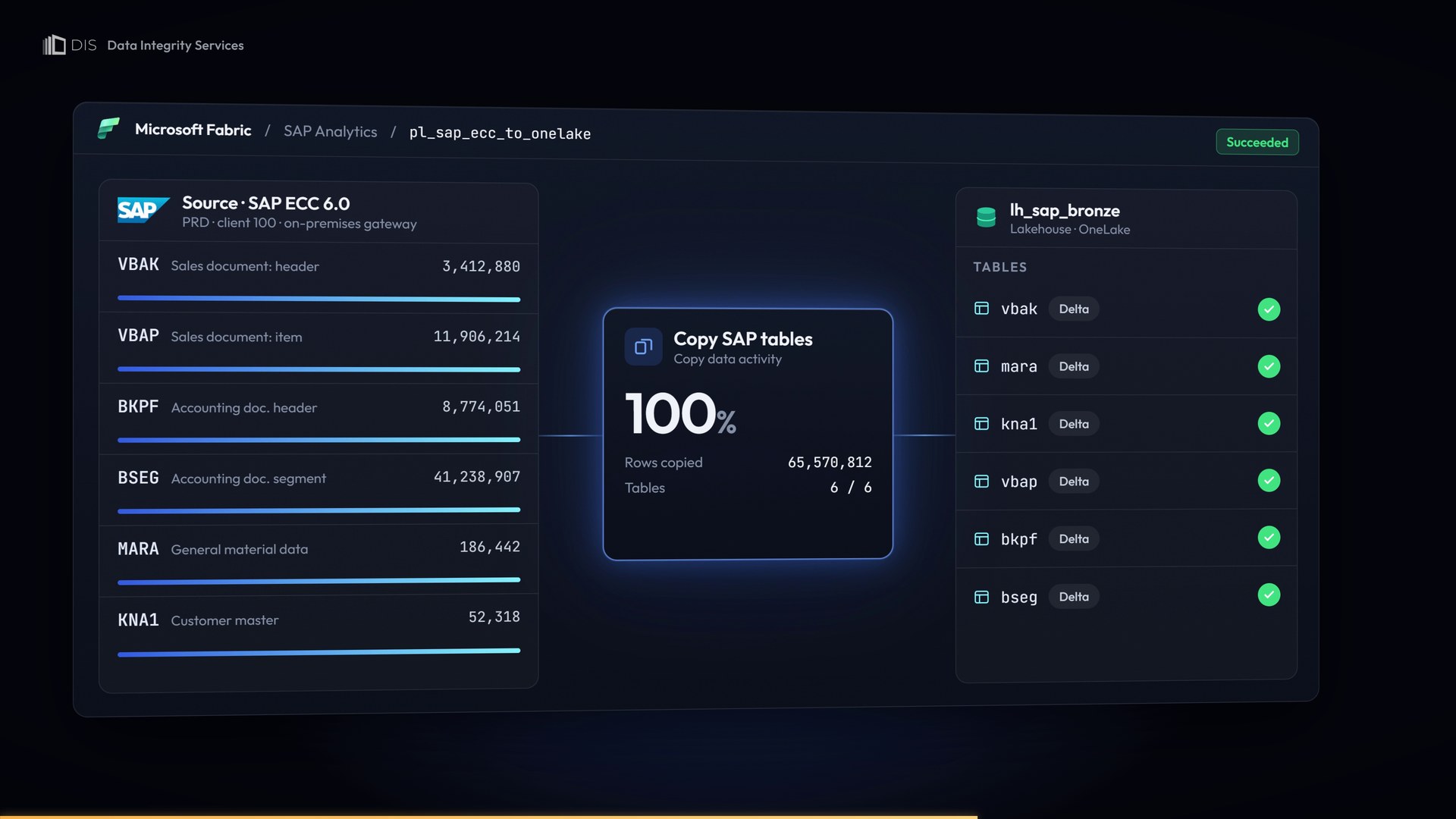
We move SAP ECC data into Microsoft Fabric: governed, modeled, and ready to report on. In the demonstration, a Fabric pipeline reads the SAP ECC 6.0 production client through an on-premises gateway and copies six tables, sales document header and item, accounting document header and segment, general material data and customer master, into a lakehouse on OneLake as Delta tables. Rows copied: 65,570,812. Tables: six of six. Status: succeeded.
From there the stills follow the data forward: a bronze lakehouse of raw SAP tables, a gold lakehouse of four star schema tables, a certified SAP Finance semantic model running in Direct Lake, and a six page Power BI report, the Q4 board pack, refreshed this morning.
None of that is a workaround. It is the data layer a modern reporting estate needs anyway, built now instead of in 2029.
When the ERP decision finally lands
This is the part that makes the sequencing safe. In the lineage view the source connection is switched from SAP ECC 6.0 to SAP S/4HANA. The gold tables keep their names, the semantic model keeps its measures, and the workspace reports back: 0 downstream changes.
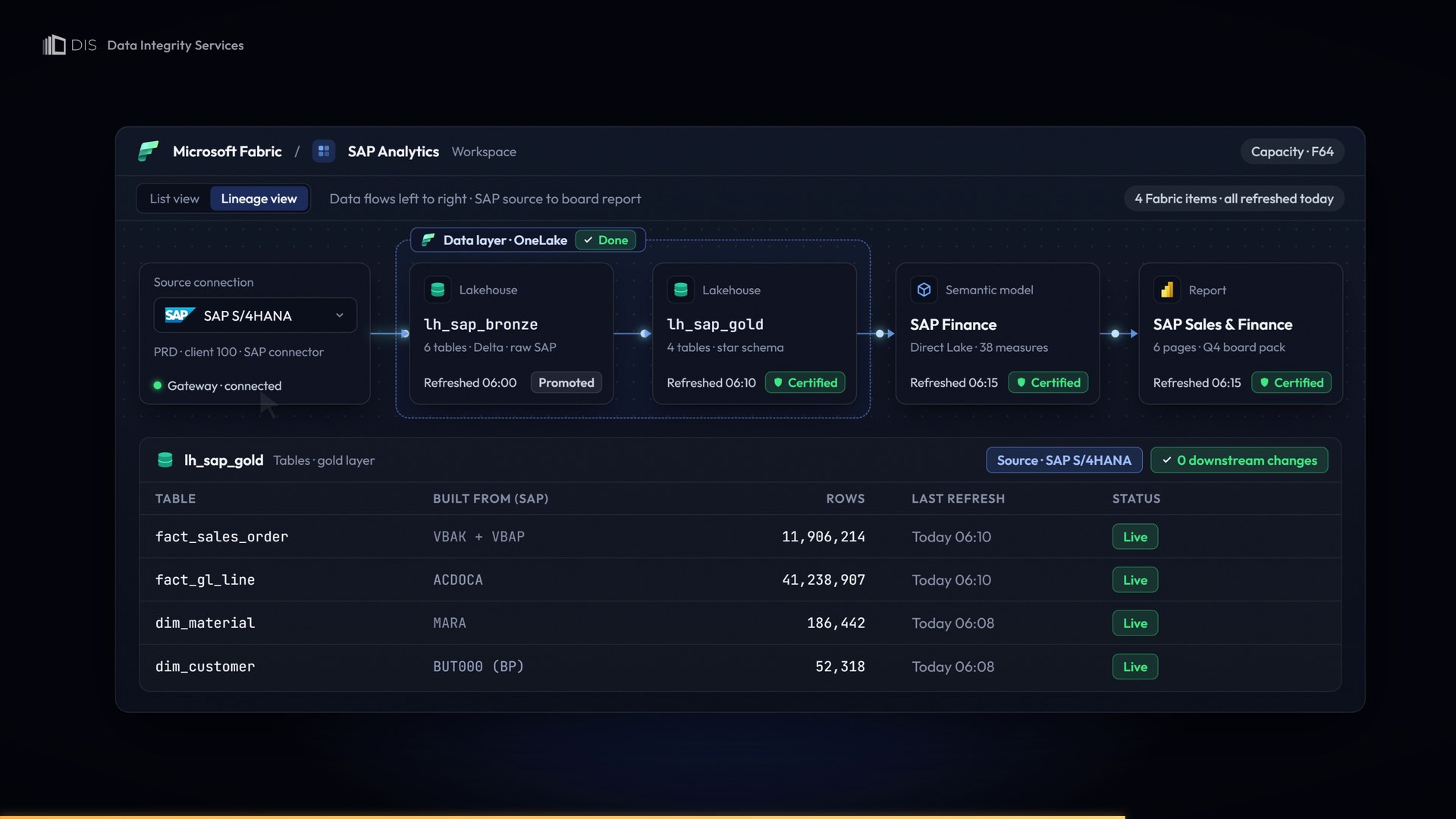
Whatever the company decides about S/4HANA, and whenever it decides, the data layer is already done. The ERP migration moves the source. It does not restart the reporting.
Microsoft funds part of the work
"And Microsoft funds part of the work," the video says. "We find what you qualify for." On screen, a funding assessment we prepared for Microsoft review shows the Azure tenant and subscriptions reviewed, the workload scope confirmed as SAP ECC 6.0 to Microsoft Fabric and Power BI, a candidate program still to confirm, and a funding request in review. Eligibility is assessed per customer.
Where this starts
It starts with the same landscape check the video opens on: which release and enhancement pack each SAP system is on, and which maintenance date applies. Then the reporting backlog: which of those 47 requests are waiting on data rather than on a decision.
Build the data layer first. Decide the ERP question on its own merits, on its own timeline. See how we approach this kind of work on our services page, or look at our data warehouse modernization case study for what a unified reporting layer looks like once it is built.